A different Caribbean each winter
The Lesser Antilles — the long curve of smaller islands running from the Virgin Islands down to Trinidad — don’t really work as a single trip. Each island is its own flight, its own culture, and often its own former colonial language, so we’ve settled into a pattern of picking two or three neighboring islands each winter rather than trying to force a whole region into one itinerary. Two consecutive Februaries have taken us through five different islands: St. Lucia, Barbados, and Grenada one year, then Guadeloupe and St. Martin the next, with a Miami stop bridging the second trip on the way home.
St. Lucia: Marigot Bay
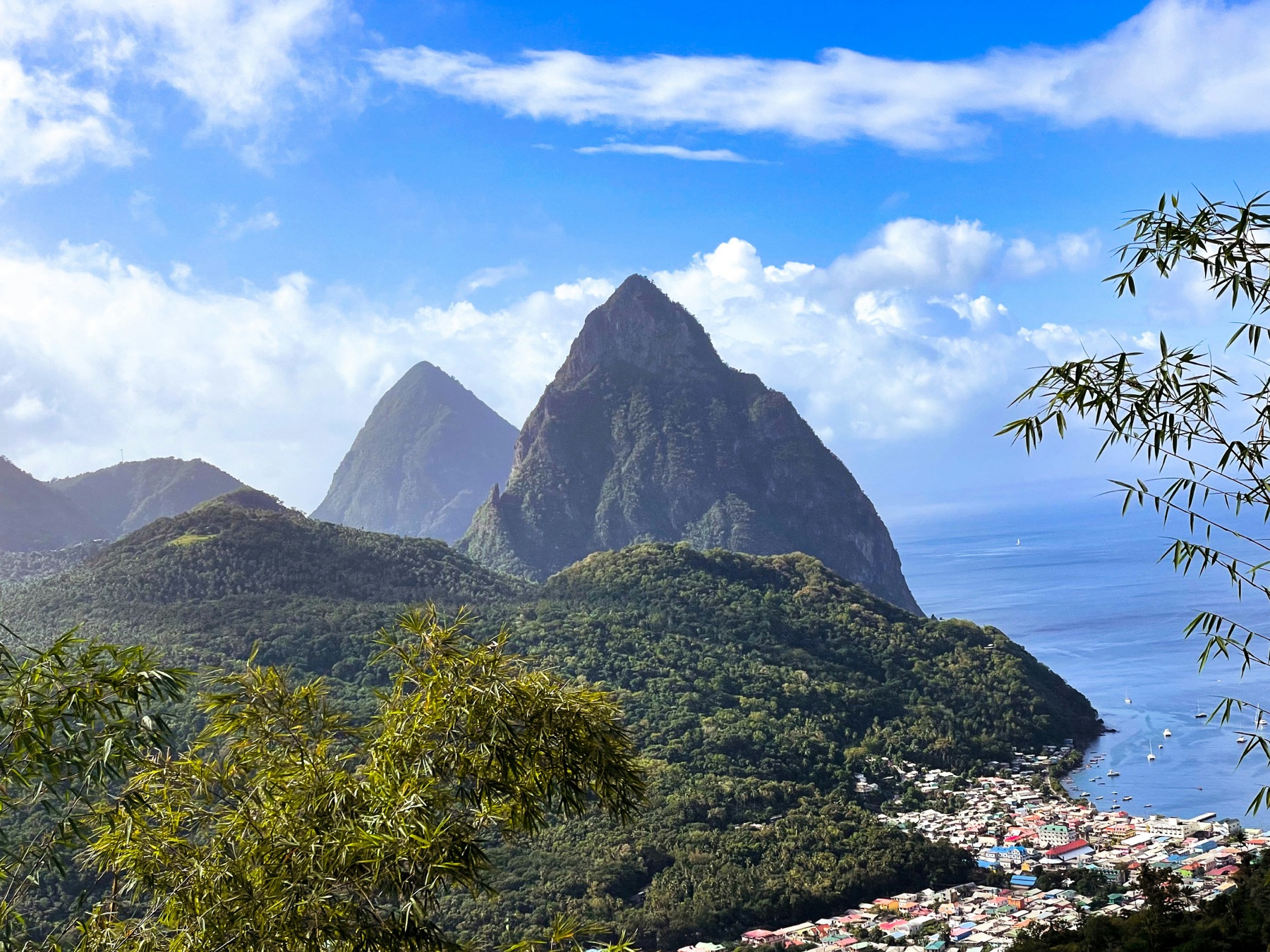
St. Lucia’s Marigot Bay is one of the most photographed harbors in the Caribbean for a reason — a narrow, almost fully enclosed natural harbor lined with palm trees, often used as the establishing shot in Caribbean travel marketing generally. It’s also a genuinely practical yacht anchorage, so expect a working harbor alongside the resort scenery, not just a postcard backdrop. St. Lucia’s twin volcanic peaks, the Pitons, are the island’s other signature sight and a worthwhile half-day trip from a Marigot Bay base, either by boat along the coast or by road.
Barbados
Barbados sits further east and outside the main volcanic island chain, which gives it flatter terrain and some of the region’s most consistently calm, clear water on its Caribbean (west) coast, while the Atlantic (east) side runs rougher and is popular with surfers. It’s also the most historically British of these islands in a way that still shows — from the architecture to a genuine, longstanding cricket culture. Bridgetown, the capital, has a UNESCO-listed historic garrison and town center worth a few hours if the itinerary allows.
Grenada: the Spice Isle
Grenada earns its nickname honestly — it’s a major producer of nutmeg and other spices, and the scent shows up literally at the airport before you’ve left the terminal. It’s smaller and less developed for mass tourism than St. Lucia or Barbados, which makes it a good pick for travelers who want a quieter, greener island experience; Saint George’s, the capital, has one of the prettier natural harbors in the region, built into a volcanic crater.
Guadeloupe: France, with better weather
Guadeloupe is a French overseas department, not an independent country, which means it functionally uses the euro, French is the primary language, and it has a genuinely French sensibility layered over Caribbean geography — patisseries and rum distilleries within the same afternoon’s drive. Its butterfly-shaped main landmass splits into two distinct halves, and Sainte-Rose, on the western wing, sits close to Guadeloupe’s rainforest interior as well as its beaches.
St. Martin: one island, two countries
St. Martin is a genuine geographic and political oddity — a single small island split between French St. Martin and Dutch Sint Maarten, with no hard border between the two sides. Baie Nettle, on the French side near the Simpson Bay lagoon, puts you within easy reach of both halves’ distinct character: quieter and more French-influenced on one side, busier and more resort-and-casino-driven on the Dutch side. Sint Maarten’s Princess Juliana Airport is also famous in its own right — its runway sits directly next to Maho Beach, close enough that landing aircraft pass low overhead, a genuine spectator activity for plane-watchers.
Miami as a Caribbean gateway
Miami shows up on this itinerary as a practical stopover rather than a destination in its own right — a common routing choice given how many Caribbean connections run through South Florida. A short Miami stop between international and regional flights is a reasonable way to break up a long travel day, even without treating it as a full stop on the trip.
Good to know: hurricane season runs roughly June through November across this entire region, which is exactly why both of our trips landed in February and March — reliably outside the risk window and generally the driest, most pleasant stretch of the Caribbean calendar.
The practical pattern
Inter-island flights in the Eastern Caribbean are typically short hops on small regional carriers, and schedules can be limited compared to major routes, so building buffer time around connections matters more here than in most parts of the world. Given how differently each island is governed, currencies and even entry requirements can shift from one stop to the next on a multi-island trip — worth confirming per island rather than assuming the last one’s rules carry over.
[Editor’s note: add what each of these islands actually meant to you — a favorite beach, the boat trip, whatever’s worth remembering — and swap in your own photos when ready.]