Croatia · Dubrovnik & South Dalmatia
Dubrovnik & the South: Beyond the Old Town Walls
Dubrovnik's walls and Old Town, the Pelješac peninsula's wine country, and why the day-trip crowds don't tell the whole story.
An honest take on Dubrovnik
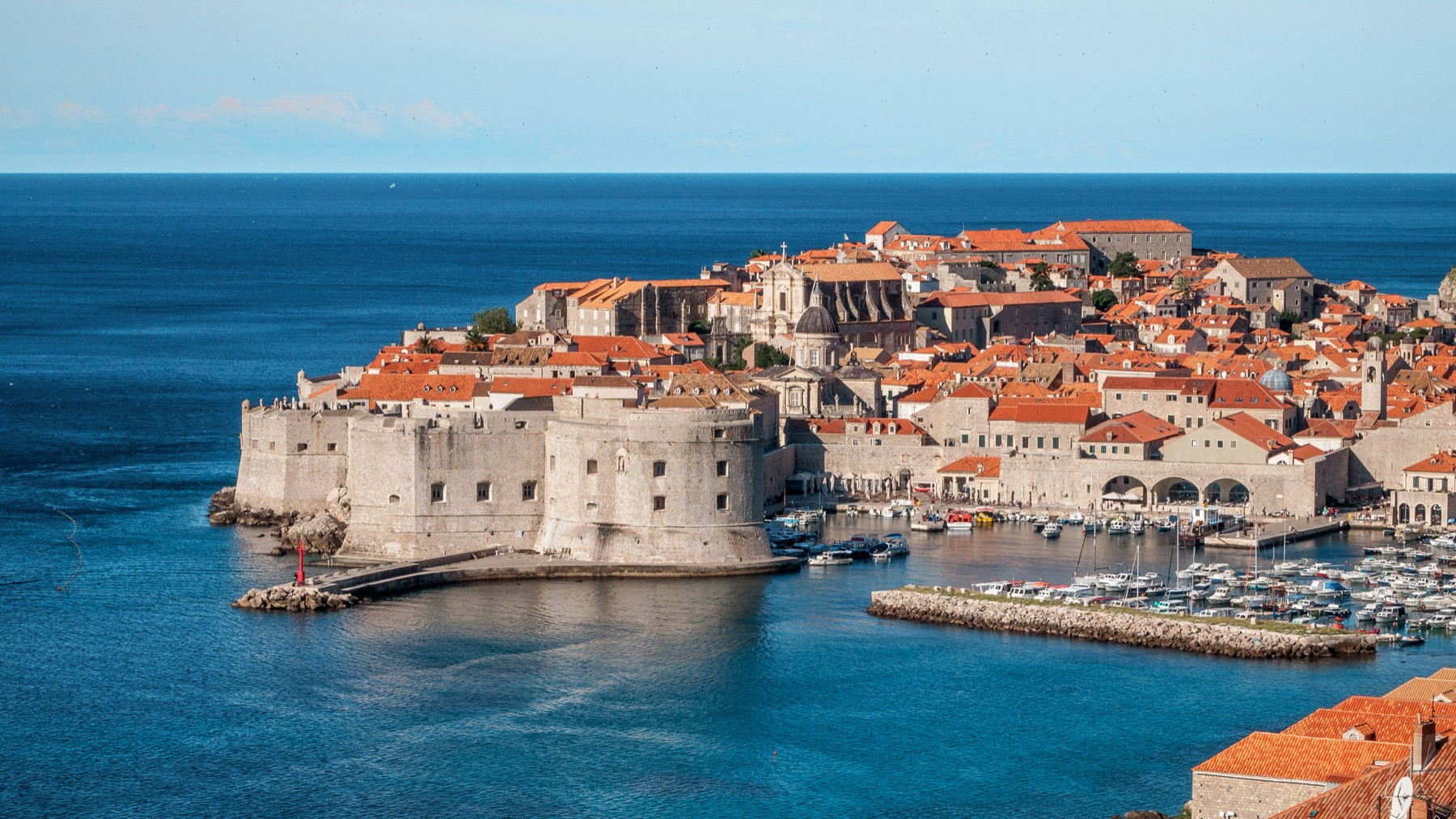
Dubrovnik’s Old Town deserves its reputation. The walls, nearly two kilometers of them, are genuinely remarkable to walk — a complete medieval fortification circling the entire old city, UNESCO-listed and about as intact as this kind of structure gets anywhere in Europe. The limestone streets, the baroque churches, the terracotta rooftops seen from above on the walls — it’s easy to see why this became the image most people carry of coastal Croatia.
It’s also, without much competition, the most cruise-ship and tour-bus affected place on the entire Croatian coast. On a heavy cruise day, the main street through the old town can fill shoulder to shoulder by mid-morning, and it changes the character of a visit considerably. Cruise line port schedules are publicly posted well in advance, and checking them before planning your own day in the old town is one of the more useful things you can do — a light day for ships can feel like an entirely different city from a heavy one.
Good to know: walking the city walls right at opening, before the tour groups from the port arrive, is worth the early alarm. The light is better for photos, the stone isn’t yet baking in full sun, and you’ll have long stretches of the walls close to yourself.
Pelješac: wine, oysters, and a very long wall
Just up the coast from Dubrovnik, the Pelješac peninsula is one of Croatia’s most serious wine regions and a genuine escape from the old town’s crowds. The steep, sun-facing slopes along the peninsula’s southern coast produce Dingač and Postup, two well-known appellations built around the Plavac Mali grape, grown on terraces so steep in places that harvesting is still done largely by hand.
Near the base of the peninsula, the town of Ston is known for oyster and mussel farming in the shallow, nutrient-rich waters of Mali Ston Bay, a tradition here that goes back centuries. Ston is also home to the Ston Walls, a long defensive wall system built by the Republic of Dubrovnik to protect the peninsula and its salt pans — far less visited than Dubrovnik’s own walls, but a genuinely impressive and much longer structure, and one most visitors to the region never make time for.
The Elaphiti Islands
Closer to Dubrovnik than Mljet, the small Elaphiti Islands — Koločep, Lopud, and Šipan chief among them — are reachable as an easy half-day or full-day boat trip and offer a more accessible dose of the same slower pace. None of them allow cars, which alone changes the rhythm of a visit, and Lopud in particular has a long sandy beach that’s a rarity along this rockier stretch of coast.
Mljet, a quieter island
Mljet, reachable by ferry from Dubrovnik, is largely covered by national park on its western half, built around two interconnected saltwater lakes ringed by pine forest. It’s a slower, greener contrast to Dubrovnik itself — a good full-day or overnight trip if the old town’s pace starts to wear on you.
Getting there, and a border quirk worth knowing
Dubrovnik Airport handles a strong seasonal roster of direct European flights, making it an easy point of entry for South Dalmatia on its own. If you’re driving the coastal road up from or down toward Split, there’s a geographic quirk worth knowing about: the main road briefly passes through Neum, a short stretch of Bosnia and Herzegovina’s coastline that splits Croatian territory in two. It’s a short, generally straightforward border crossing rather than a real obstacle, but it’s worth having a passport handy and building a few extra minutes into the drive, since queues can build in peak season.
Best time to visit
May, June, and September give the most comfortable balance of warm weather and lighter crowds, both in the old town and on the roads leading in and out of it. July and August bring the heaviest cruise traffic and the highest temperatures.
A practical note: basing part of a longer trip on Pelješac, in Ston, or in one of the smaller towns south of Dubrovnik — rather than staying inside the old town walls the entire time — tends to make for a more relaxed trip overall, with day trips into Dubrovnik itself rather than the reverse.
[Editor’s note: this is the spot for your own connection to Dubrovnik and the south — family history, a favorite corner of Pelješac, what this part of the coast means to you both. Swap in your own photos here too.]
Planning a similar trip?
Compare hotel prices and flight options before you lock in dates — same sites we actually use.
Booking.com
The broadest hotel and apartment inventory worldwide, free cancellation on most rooms.
Kayak
Our go-to for comparing flight prices and setting price-drop alerts before booking.
Discover Cars
Consistently the best-value car rental comparison site for international trips.