Croatia · Istria
Istria: Hill Towns, the Coast, and the Best Truffles in the Country
Croatia's Italian-influenced peninsula — Rovinj, Poreč, Pula, and the hill towns just inland.
A different Croatia entirely
Istria doesn’t feel like the rest of the coast, and that’s the point of going. Centuries under Venetian rule left a real mark here — road signs are bilingual in Croatian and Italian, the architecture in the coastal towns leans Venetian rather than Dalmatian, and the food culture runs on olive oil, truffles, and wine in a way that sets it apart from anywhere else in the country. Locals will tell you Istria is its own thing before they’ll call it typically Croatian, and they’re not wrong to.
The peninsula is compact enough that you can base yourself almost anywhere on the coast and still reach the inland hill towns within half an hour or so, which makes it one of the easier regions in Croatia to plan a trip around without a rigid day-by-day itinerary.
The coastal towns
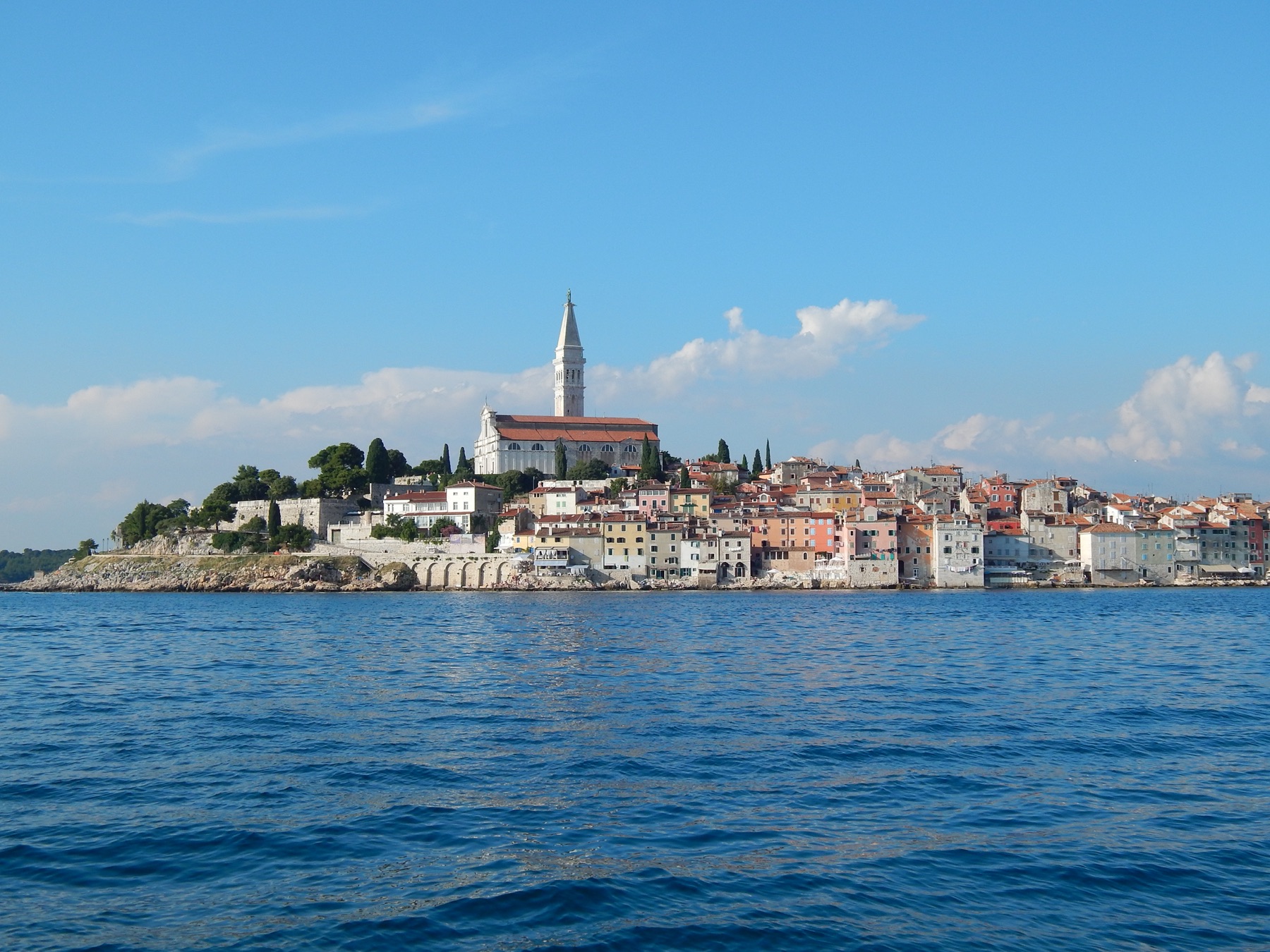
Rovinj is the one everyone pictures when they think of Istria — a tightly packed old town rising up a peninsula to the bell tower of St. Euphemia’s church, with the streets narrowing as they climb. It’s genuinely one of the most photogenic towns on the entire Adriatic, and it earns that reputation on foot as much as from a distance, with alleys strung with laundry lines and small squares opening up where you don’t expect them.
Poreč centers on the Euphrasian Basilica, a UNESCO World Heritage Site dating to the 6th century, with Byzantine mosaics in the apse that are among the best-preserved of their kind anywhere on the Adriatic. The old town itself is smaller and easier to cover in an afternoon than Rovinj’s, which makes it a good pairing on a longer coastal drive.
Pula anchors the southern tip of the peninsula and is built around a Roman arena that ranks among the best-preserved in the world — smaller than the Colosseum but more intact in places, and still used for concerts and film screenings in summer. Pula also has a more workaday feel than Rovinj or Poreč, since it’s a real regional city rather than a town shaped primarily around tourism.
The hill towns and truffle country
Just inland, Istria’s hill towns are where a lot of the region’s character actually lives. Motovun, perched on a hilltop above the Mirna River valley, and Grožnjan, smaller and known for its concentration of artist studios and galleries, both reward simply wandering their stone lanes for an hour or two.
This inland area, particularly the forests around the Mirna valley, is also where Istria’s truffles come from — both the white truffles that peak in autumn and the black truffles available for more of the year. Truffle hunting tours with local hunters and their dogs are a genuine regional tradition here, not a tourist invention, and autumn menus across the peninsula shift to build around whatever’s been found that week.
Good to know: the hill towns are small, and midday tour buses from the coast can fill their main squares fast in high season. Arriving in the late morning before the buses show up, or staying into early evening after they’ve left, makes a real difference in how much you actually get to enjoy the place.
Getting there and getting around
Pula Airport handles direct flights from a number of European cities, especially in summer, and is the most straightforward way in if you’re focused on Istria specifically. It’s also worth checking flights into Trieste or Ljubljana, both a manageable drive from the peninsula — Istria sits close enough to the Italian and Slovenian borders that flying into a neighboring country is sometimes the cheaper option, and the drive across the border adds only an hour or so.
Roads throughout Istria are well-developed by Croatian standards, since this is the country’s most consistently touristed region after Dalmatia. A rental car is the easiest way to link the coastal towns with the hill towns inland, since bus connections between the smaller places thin out considerably outside peak season.
Best time to visit
Late spring and early autumn are the sweet spots — warm enough for the coast, cool enough for comfortable walking through the hill towns, and, in October and November, timed right for white truffle season. July and August bring the best weather but also the heaviest crowds in Rovinj and Poreč specifically.
[Editor’s note: this is the place to add your own connection to Istria — family ties, favorite konoba, what draws you back to this particular stretch of coast. Swap in your own photos here too.]
Planning a similar trip?
Compare hotel prices and flight options before you lock in dates — same sites we actually use.
Booking.com
The broadest hotel and apartment inventory worldwide, free cancellation on most rooms.
Kayak
Our go-to for comparing flight prices and setting price-drop alerts before booking.
Discover Cars
Consistently the best-value car rental comparison site for international trips.